Foster City highlight
Master-planned waterfront community
Developed in the 1960s on Brewer Island in the San Francisco Bay through a master-planned design by real estate magnate T. Jack Foster.
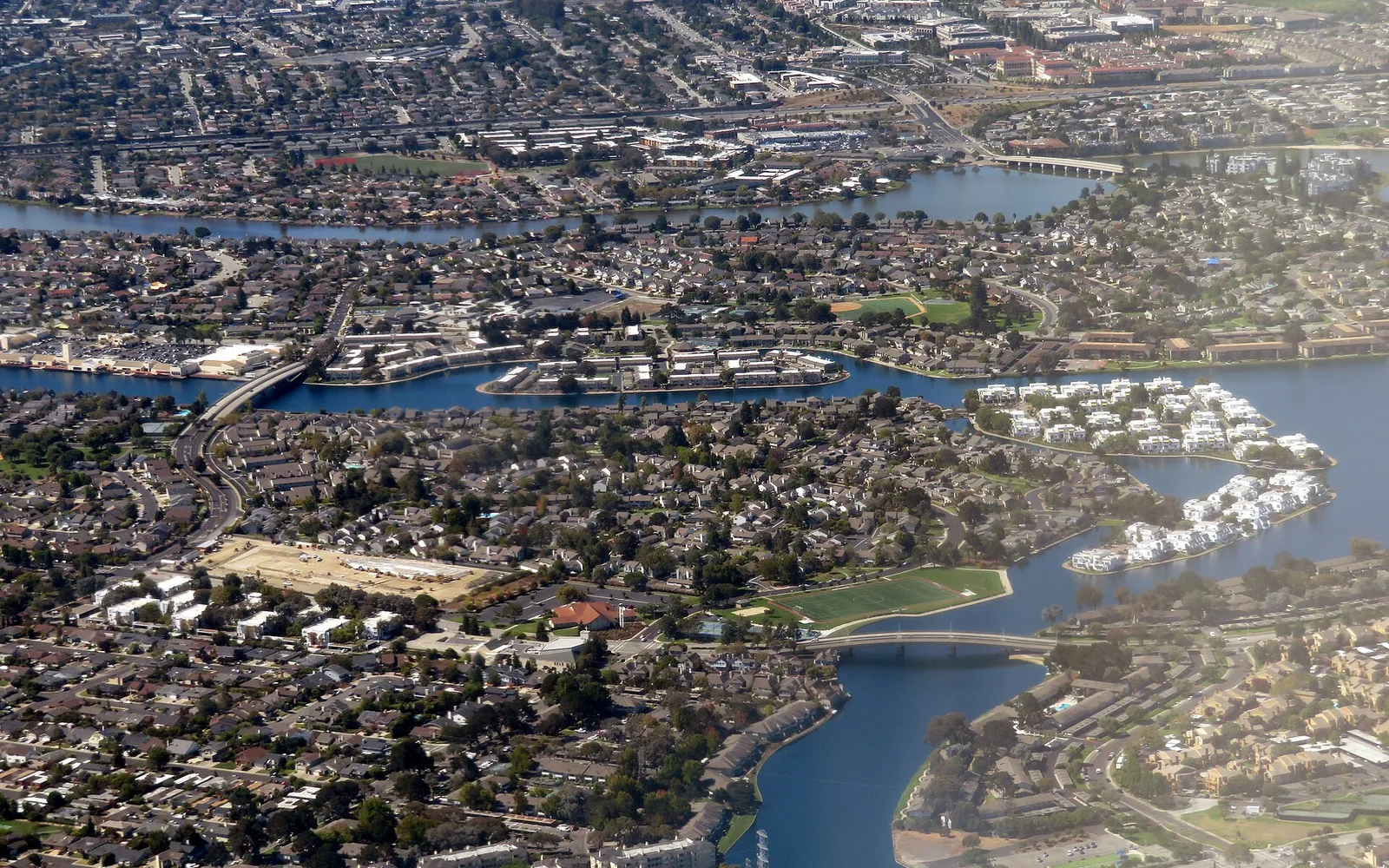
Foster City was engineered into existence beginning in the 1960s on Brewer Island, which was enlarged through landfill operations in the San Francisco Bay marshes. T. Jack Foster, a real estate developer with a vision for comprehensive urban planning, lent his name to the city and oversaw its initial design. The first residents moved in on March 7, 1964, arriving in a city that had been entirely conceived as one integrated whole rather than grown piecemeal over generations.
The city was built around an extensive lagoon system, which serves as both a drainage solution and a defining geographic feature of daily life. The lagoon occupies a substantial portion of the city's footprint, making waterfront views and water-adjacent living more common here than in most inland communities. With an extraordinary 80.9 percent of the city's 19.83 square miles being water surface, Foster City is one of the most water-centric neighborhoods in the Bay Area, yet its 33,805 residents live on carefully engineered uplands.
Master-planned cities create a particular kind of stability in the built environment: they were designed as complete systems, and households often remain there for decades. That stability makes it easier to plan for future needs. Life insurance on the primary earner protects the family's choice to stay in their home through a mortgage's full term, and Foster City's design makes such long-term planning feel natural.